


Lesson Plan
Community Action Programs: The Most Controversial Aspect of the War on Poverty
Location
Years
Cleveland, Ohio
1960s/1970s
Theme
Classroom
Poverty Policy
Distribution of Public Resources
College, High School
About this Module
In this lesson, students will learn about the local power struggles that influenced the War on Poverty's success or failure from the critiques and demands advanced by economic justice advocates. Students will examine different interpretations of the "maximum feasible participation" clause in the Economic Opportunity Act of 1964 to evaluate how that phrase gained meaning after implementation. Students will develop a better understanding of why Community Action Programs became the most controversial aspect of the War on Poverty.
The setting is Northern U.S. cities, with a heavy emphasis on Cleveland, Ohio. The three sources include criticisms of local elected representatives' implementation of Community Action Programs.
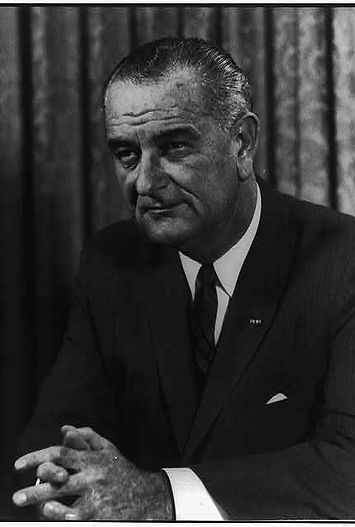
Lyndon B. Johnson, head-and-shoulders portrait, facing left, June, 964. Photographer: Unknown. Photo archived at the Library of Congress.
Primary Source #1 - Critique of the Cleveland Community Action Program
Critique of the Cleveland Community Action Program Proposal, October 1, 1964, box 2, folder 33, MS 4474, Inner City Protest Parish Records, Western Reserve Historical Society, Cleveland, Ohio.


Primary Source #2 - Demands of the Citizens Committee for an Adeqaute Cleveland Community Action Program
Critique of the Cleveland Community Action Program Proposal, October 1, 1964, box 2, folder 33, MS 4474, Inner City Protest Parish Records, Western Reserve Historical Society, Cleveland, Ohio.

Primary Source #3 - Letter from US Representative Charles A. Vanik to Director Sargent Shriver
Letter from US Representative Charles A. Vanik to Director Sargent Shriver, October 1, 1964, box 2, folder 35, MS 4474, Inner City Protest Parish Records, Western Reserve Historical Society, Cleveland, Ohio.


Core Question: How did different political actors understand the phrase "maximum feasible participation?"
Context
After President Lyndon B. Johnson announced his plans for "an unconditional war on poverty," he signed the Economic Opportunity Act of 1964 into law.
Council for Economic Opportunity Appointees by Race and Gender

Residential and Economic Characteristics of Council for Economic Opportunity Appointees

Teaching
The meaning of "maximum feasible participation" was contested.
-
For the Critique document, teachers can prompt students to consider why Mayor Ralph Locher appointed predominantly white, suburban, middle-class members to the Council for Economic Opportunity in Cleveland.
-
For the Demands document, how did members of the Citizens Committee for an Adequate Cleveland Community Action Program understand "maximum feasible participation?" If met, how would their demands have altered the power dynamics between low-income and middle-class members of the Council for Economic Opportunity?
-
For the Letter document,
-
Drawing on all three sources, teachers should instruct students to reflect on
Further Context and Teaching Resources
Annelise Orleck, Storming Caesars Palace: How Black Mothers Fought Their Own War on Poverty (Beacon Press, 2005).
Annelise Orleck, and Lisa Gayle Hazirjian, eds., The War on Poverty: A New Grassroots History, 1964-1980 (University of Georgia Press, 2011), Part One.
Part One has four chapters (written by Guian A. McKee, Rhonda Y. Williams, Wesley G. Phelps, and Marc S. Rodriguez) that examine case studies from various US cities. Annelise Orleck's introduction also provides a great overview of the historiography of the War on Poverty, detailing how a renewed focus on local context has illuminated the power struggles between elected politicians and grassroots activists that determined the effectiveness of antipoverty programs.
Wesley G. Phelps, A People's War on Poverty: Urban Politics and Grassroots Activists in Houston (University of Georgia Press), Chapter One.
Chapter One
Kimberly Stahler, "Rats, Gender, and Representation: How Cleveland Welfare Rights Activists Defined Democracy, 1964-1966,” Journal of Urban History 50, no. 3 (2024): 674-692, https://doi.org/10.1177/00961442221102120.
Michael Woodsworth, Battle for Bed-Study: The Long War on Poverty in New York City (Harvard University Press, 2016), .